Why Commercial Carpets are So Important


Understanding why commercial carpets are important starts with recognising that they do more than complete the look of a workplace.
Commercial carpets are important because they do more than complete the look of a workplace. When the product and installation suit the space, carpet can help manage noise, improve comfort underfoot, support safer movement and create a consistent professional interior.
The strongest results come from choosing carpet according to the building, traffic level, cleaning plan and operational needs. An office passage, hotel corridor, reception area and boardroom do not place the same demands on a floor. Each area needs a commercial specification that balances performance, appearance and maintenance.
Quick Answer
Understanding why commercial carpets are important comes down to acoustics, comfort, movement, professional design and practical maintenance. Commercial carpet matters because it can absorb everyday sound, provide a more comfortable walking surface, define work zones and give business interiors a professional finish. Carpet tiles can also simplify localised replacement when selected and installed correctly. The best option depends on traffic, castor use, sunlight, moisture exposure, fire requirements, maintenance resources and the manufacturer’s commercial use classification.
1. Commercial Carpets Are Designed for Demanding Workplaces
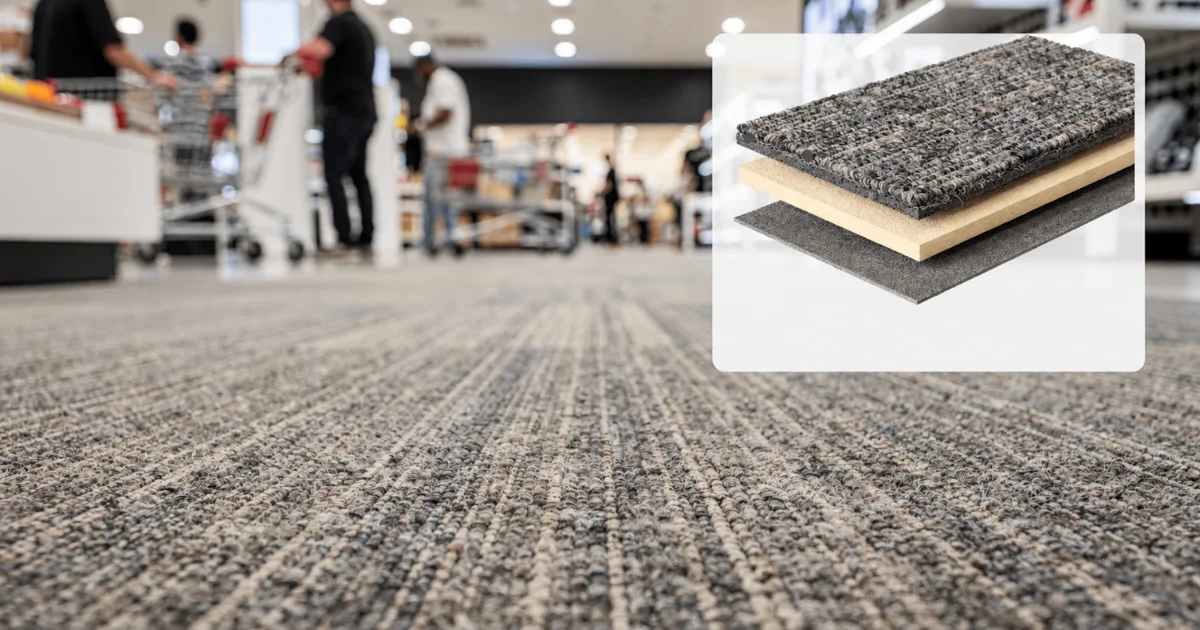
Commercial environments experience repeated foot traffic, furniture movement, tracked in soil and concentrated wear along entrances and passages. A carpet intended for commercial use is selected and tested for more demanding conditions than a typical quiet residential room.
What makes a carpet suitable for commercial use?
A suitable commercial carpet has a documented use classification that matches the intended area. Fibre, pile construction, density, backing, dimensional stability and installation method all influence how the floor performs. The specification should also account for castor chairs, stairs, transitions, direct sunlight and any cleaning chemicals used on site.
A product described as commercial is not automatically appropriate for every building. A lightly used private office and a busy retail entrance require different levels of performance. Confirm the exact manufacturer rating, warranty conditions and recommended installation method before ordering.
2. Commercial Carpet Can Support Better Acoustic Comfort
Workplaces contain footsteps, moving chairs, telephone conversations, meetings and equipment noise. Hard surfaces can reflect sound around a room, while carpet can absorb some airborne and impact sound. This can make offices, boardrooms, hospitality areas and learning spaces feel calmer and less harsh.
Does commercial carpet reduce office noise?
Yes, commercial carpet can reduce reflected sound and soften the noise created by footsteps and furniture movement. The result depends on the carpet construction, backing, underlay where applicable, room size and other interior finishes. Carpet should form part of the wider acoustic design rather than being treated as a guaranteed solution to every noise problem.
The Carpet and Rug Institute explains that carpet can serve as both a floor covering and an acoustic aid. Its guidance on finding the right commercial carpet recommends comparing the acoustic values of individual constructions and cushion combinations.
3. The Right Carpet Can Improve Comfort and Movement
Carpet provides a softer surface underfoot than many hard flooring materials. This can make reception areas, passages, meeting rooms and work zones feel more comfortable, especially where people stand or walk for long periods. Cushion backed products may provide additional underfoot comfort, but the complete specification must still suit traffic and furniture use.
Is commercial carpet safer than a hard floor?
Carpet can provide a more secure feeling underfoot and may reduce the sliding associated with some smooth surfaces. It does not remove the need for safe building management. Loose edges, raised transitions, damaged tiles and wet entrance areas can still create hazards and should be corrected promptly.
Entrance matting and moisture control remain essential. Water tracked into a building must be managed before it spreads across the floor. Routes, transitions and stair edges should be clearly visible and installed according to the relevant product and building requirements.
4. Commercial Carpets Help Create a Professional Interior
Flooring covers a large visual area, so it influences how customers, employees and visitors experience a business. Colour, pattern and layout can reinforce the intended character of an office, showroom, hotel, restaurant, school or healthcare environment.
How can carpet support workplace design?
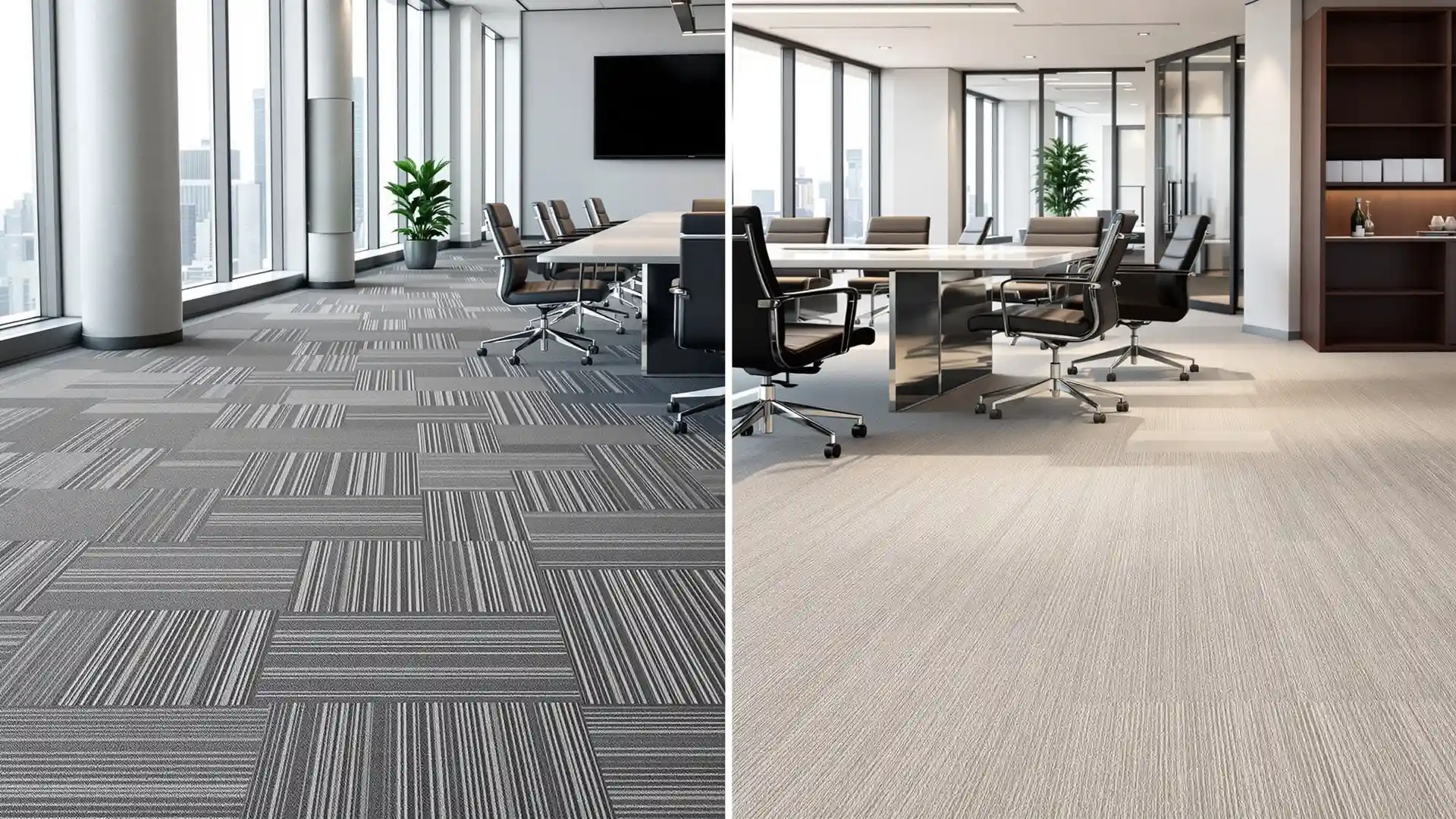
Commercial carpet can define reception points, collaboration zones, quieter work areas and movement routes without adding physical barriers. Carpet tiles and planks allow designers to combine colours, directions and patterns, while broadloom can create a continuous finish in selected prestige spaces.
Design should remain practical. Mid tone colours, textured patterns and carefully planned transitions may make everyday soil and wear less noticeable. Very pale colours can demand more frequent visible cleaning in entrances and food service areas, while very dark solid colours may show lint and dust.
5. Carpet Tiles Can Make Localised Replacement Easier
One of the practical advantages of modular carpet is that selected tiles or planks may be replaceable after staining or damage. This can reduce the need to lift a complete room, provided matching stock is available and the surrounding installation remains sound.
Are carpet tiles better than broadloom for a business?
Carpet tiles are often practical in busy offices, passages and retail areas because individual modules can be accessed or replaced. Broadloom may be preferred where a continuous appearance and fewer visible joins are important. Neither format is always better. The right choice depends on room layout, design, access, maintenance, installation and expected traffic.
Explore Carpet & Decor’s range of commercial carpet planks when comparing modular designs for active business interiors.
Buyer Tip
Order an appropriate quantity of spare carpet tiles from the same production batch and store them flat in a clean, dry location. Clearly label the boxes by product, colour, batch and installation area. This can make future localised replacement more consistent when a tile is permanently damaged.
6. A Planned Specification Can Support Long Term Value
The lowest purchase price does not always produce the lowest overall flooring cost. Businesses should consider expected service, cleaning, repairs, operational disruption and eventual replacement. A carpet that suits the traffic and maintenance capacity of the building may offer better value than an unsuitable product that quickly loses its appearance.
How should a business compare commercial carpet costs?
Compare the full installed system rather than the carpet price alone. Include subfloor preparation, moisture testing where required, adhesive or underlay, trims, installation, cleaning equipment, planned deep cleaning, spare material and replacement access. Warranty conditions and manufacturer care instructions should also be reviewed before the final decision.
Avoid relying on a fixed lifespan promise. Carpet performance varies according to the product, installation, foot traffic, castor use, soil exposure and maintenance. A detailed specification and realistic cleaning plan provide a stronger basis for budgeting than a general number of years.
7. Commercial Carpet Can Be Maintained Around Business Operations
A maintenance plan helps preserve appearance and prevents soil from becoming deeply embedded. High traffic entrances and passages may need more frequent attention than private offices. Spills should be treated promptly with methods approved for the fibre and backing, and wet cleaning should allow for proper drying before the area returns to normal use.
How often should commercial carpet be cleaned?
Cleaning frequency should follow the manufacturer’s care plan and the actual conditions in each zone. Busy entrances may need frequent vacuuming and spot treatment, while low traffic rooms may need less intervention. Schedule restorative cleaning according to soil levels, product guidance, warranty conditions and the building’s operating hours.
The Carpet and Rug Institute’s commercial carpet cleaning and maintenance guidance recommends stopping soil at entrances, vacuuming consistently and arranging periodic deep cleaning with appropriate systems.
Which Commercial Carpet Material Should You Choose?
The best material depends on the intended area, not a single fibre name. Solution dyed nylon is commonly considered for demanding spaces because many ranges offer resilience, colour retention and practical cleaning performance. Polypropylene options may suit selected budget conscious or lower demand areas, while wool and wool blends can provide a refined finish in suitable executive or hospitality spaces.
Loop Pile Carpet
Loop pile constructions often suit offices, corridors and other active areas because their firm surface can provide practical wear performance. Structured and patterned loops may help disguise everyday tracking. Confirm that the specific range suits castor chairs, stairs or other concentrated demands where relevant.
Cut Pile Carpet
Cut pile carpet can provide a softer and more luxurious appearance for boardrooms, executive offices and selected hospitality areas. Plush finishes may show footprints, shading and vacuum marks more readily, so the visual expectation and cleaning routine should be considered.
Cushion Backed Carpet
Cushion backing can add comfort and acoustic support, depending on the product. It may be useful in offices and spaces where underfoot feel matters. Check the complete product specification because backing choice also affects installation, dimensional stability, moisture management and compatibility with the subfloor.
How Should South African Conditions Affect Your Choice?
South African commercial buildings face different combinations of dust, sand, seasonal rain, coastal humidity, direct sunlight and intensive entrance traffic. The specification should respond to the actual building rather than relying only on a national or regional label.
Entrances and Dust
Dust and grit can act abrasively when carried further into a building. Use suitably sized entrance matting, clean it regularly and increase vacuuming along the first traffic zones. Carpet colours and patterns should also be selected with the expected soil type in mind.
Coastal Humidity and Moisture
A damp subfloor or recurring water entry must be corrected before carpet is installed. Product backing, adhesive and moisture control requirements should suit the measured conditions. Ventilation and drying time are also important after wet cleaning in humid environments.
Strong Sunlight
Large windows can expose flooring to sustained sunlight. Ask for documented colourfastness and compare samples inside the actual room. Suitable blinds or other window coverings can help manage direct exposure, but no carpet should be described as completely fade proof without manufacturer evidence.
How Do You Choose the Right Commercial Carpet?
Start by mapping the building into zones. Record traffic, entrance soil, castor use, sunlight, moisture risk, acoustic needs and cleaning access in each area. Then compare commercial use classifications, fibres, construction, backing, tile or broadloom format, colour and installation requirements.
Request the relevant technical documents and review fire performance, slip related information, emissions testing, warranty conditions and care instructions where applicable to the project. Confirm subfloor preparation and moisture requirements before installation. The final choice should balance performance, design, maintenance capacity and the approved project budget.
Browse Carpet & Decor’s range of commercial and office carpets when comparing flooring for offices, hospitality spaces, churches and other commercial interiors.
Why Commercial Carpets Are Important for South African Workspaces
Commercial carpets are so important because the correct flooring specification can support acoustics, comfort, movement, professional design and practical maintenance at the same time. Modular formats can also make selected repairs easier and help businesses plan for future changes.
The value depends on choosing the right carpet for each zone and maintaining it correctly. Carpet & Decor can help compare fibres, constructions, formats and commercial ratings according to the building, expected traffic and design requirements.
Frequently Asked Questions
Why are commercial carpets important in an office?
Commercial carpets can absorb everyday sound, provide greater comfort underfoot and create a professional finish across large work areas. The correct product can also cope with regular foot traffic and furniture movement. Performance depends on choosing a suitable commercial use rating, installing it correctly and following the manufacturer’s maintenance guidance.
Are carpet tiles a good choice for busy workplaces?
Yes, carpet tiles can be practical in busy workplaces because selected damaged or stained modules may be replaced without lifting the complete floor. They also allow flexible patterns and workplace zoning. The chosen tile must still suit the traffic, castor use, subfloor, cleaning system and installation requirements of the specific area.
Does commercial carpet help reduce workplace noise?
Commercial carpet can absorb some airborne and impact sound, including footsteps and moving chairs. This may make offices, boardrooms and hospitality areas feel quieter. The acoustic result varies according to carpet construction, backing, underlay, room size and other finishes, so carpet should form part of the complete acoustic design.
How long does commercial carpet last?
There is no single lifespan for every commercial carpet. Service life depends on the product specification, traffic, entrance soil, furniture, installation and maintenance. A suitable commercial use classification, effective entrance matting, regular vacuuming, prompt spot treatment and planned restorative cleaning can help the carpet retain its appearance and performance for longer.
How do I choose the right commercial carpet?
Assess every area according to foot traffic, castor chairs, moisture, sunlight, acoustic needs, cleaning access and design goals. Then compare the fibre, pile construction, backing, format, commercial rating and warranty. Carpet & Decor can help match suitable options to the building, intended use, maintenance plan and available project budget.