
Is Artificial Grass for Dogs a Good Option in South Africa?

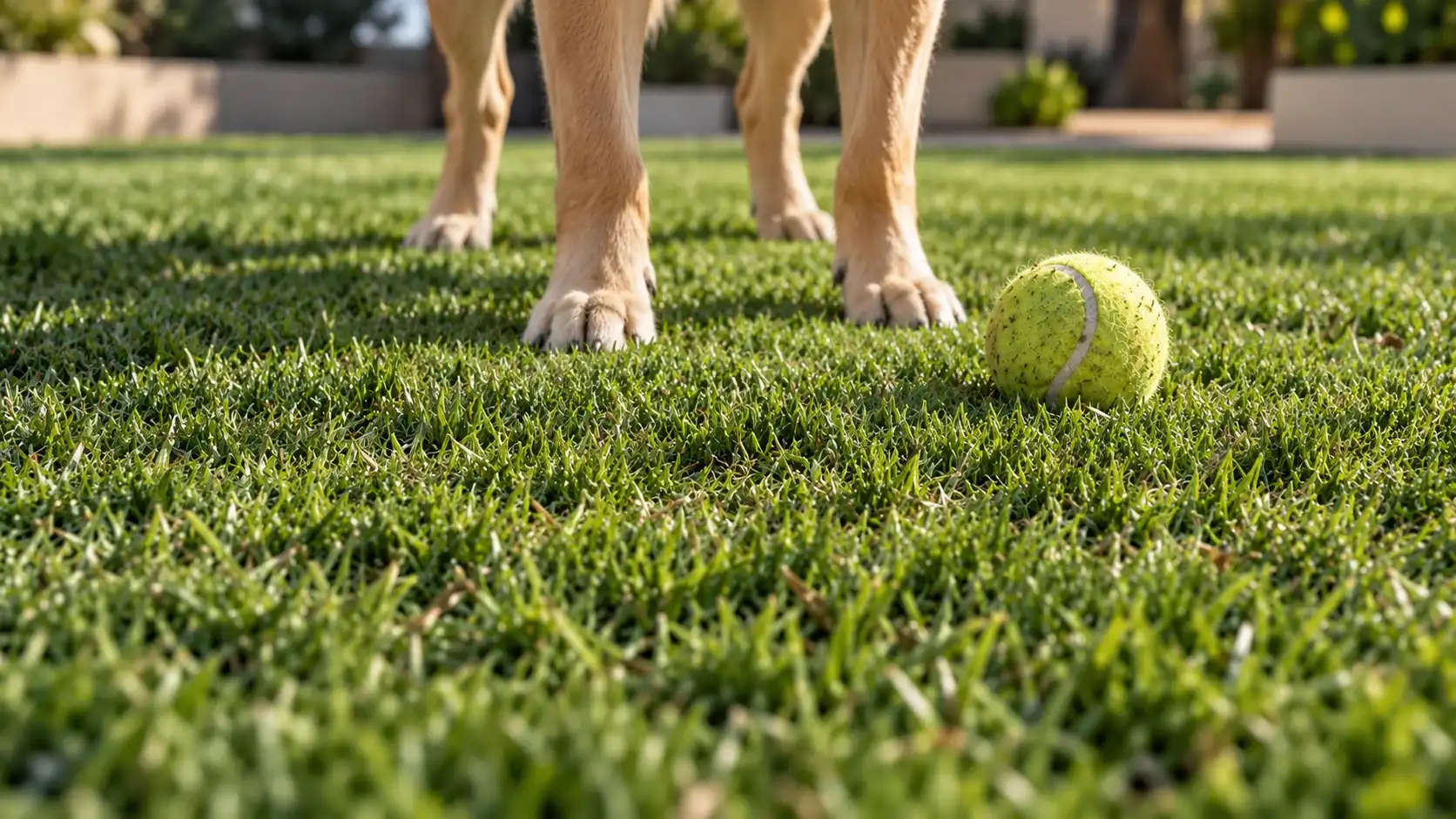
Artificial grass for dogs can provide a neat, consistent outdoor surface without muddy patches or worn routes through a natural lawn. It can work well in South African gardens, courtyards and selected balconies, but a successful result depends on more than choosing a green surface that looks realistic. The turf, base, drainage, edges and cleaning plan must all suit the site and the dogs using it.
Dog owners should also plan for heat. Synthetic turf can become uncomfortably hot in direct sun, particularly during warm South African afternoons. Shade, access to water and a simple surface temperature check are therefore as important as durability and appearance.
Quick Answer
Artificial grass can be suitable for dogs when the selected product is approved for the intended use, the installation drains properly and the household follows a regular cleaning routine. It does not eliminate heat, odour or maintenance concerns. Check the product documentation, assess the site and plan shaded areas before deciding whether it is right for your dog and garden.
What Makes Artificial Grass for Dogs a Suitable Choice?
A dog-friendly surface needs to cope with running, turning, scratching, toileting and repeated cleaning. The surface should feel comfortable under normal conditions, while the construction beneath it must remain stable and allow liquid to move away. The exact solution will vary according to the number and size of the dogs, the site, the local climate and how much of the area receives direct sun.
Start by asking whether the particular turf product is recommended for domestic pet areas. Review the fibre material, backing, drainage arrangement, installation instructions, warranty and approved cleaning methods. A general claim that a product is durable is not enough. The selected range should be assessed for the actual traffic, exposure and maintenance routine.
Pile height should not be selected by one universal rule. Shorter, denser products may make solid waste easier to remove, while other products may provide a softer appearance and feel. Density, fibre shape, backing and installation quality also affect how the surface performs. Compare complete samples rather than judging the turf only by pile length.
How Do Drainage and Odour Control Work
Odour problems usually develop when urine, rinse water or rain cannot move through and away from the system. The visible turf is only the top layer. The backing, joins, base, falls and drainage outlet all influence whether liquid disperses or remains trapped below the surface. Good drainage is particularly important when artificial grass for dogs is installed in a frequently used toileting area.
The installer should assess the existing ground or hard surface, identify where water can discharge and specify a compatible build-up. Soil type, rainfall, thresholds, nearby walls and low points can change the solution. A free-draining base may be appropriate on prepared ground, while concrete needs a clear route to an open edge or suitable outlet. The system should not direct water towards the building or neighbouring property.
Pet use should be discussed before installation begins. Areas where a dog toilets repeatedly may need closer attention to drainage and cleaning access. Joins and perimeter details must not create pockets where contaminated water can collect. If an odour remains despite correct surface cleaning, the cause may be below the turf and should be investigated rather than disguised with fragrance.
Can Dogs Damage Artificial Grass
A suitable artificial grass system can tolerate normal running and play, but no surface is indestructible. Dogs that dig, chew edges or pull at loose joins can damage turf that is poorly secured or not intended for that level of use. Large dogs and several active dogs may also place greater stress on the same routes and turning areas.
Good preparation reduces avoidable problems. The base must be stable, joins should be completed according to the product system and exposed edges should be finished securely. Gates, steps, corners and narrow passages deserve particular attention because dogs may accelerate, turn or scratch there repeatedly.
Inspect the area after installation and during routine cleaning. Raised edges, separating joins, loose fixing points or displaced infill should be addressed before a dog can pull at them. If a dog persistently chews or eats synthetic material, restrict access and speak to a veterinarian about the behaviour.
Does Artificial Grass Become Too Hot for Dog Paws
Artificial grass for dogs can become hotter than natural grass when exposed to direct sunlight. Colour, fibre, infill, air movement, shade and the surface beneath it all affect the temperature, so no single product or cooling claim should be treated as a guarantee.
The American Kennel Club includes artificial grass among the surfaces that can become hot enough to cause discomfort or injury and provides practical guidance on hot surfaces and dog paws. Before allowing play, touch the surface with the back of your hand and move the dog to a cooler area if the turf feels uncomfortably hot. Puppies, older dogs and dogs with sensitive paws may require extra caution.
Create permanent or adjustable shade over part of the area and make sure clean drinking water is always available. Plan a cooler route between the house, toileting area and resting space. Rinsing may cool the surface temporarily, but the effect can be short and the added water still needs somewhere to drain. During extreme heat, keep the dog indoors or use a cooler surface until conditions improve.
How Should Artificial Grass Be Cleaned After Dogs
Remove solid waste promptly and dispose of it safely. Cleaning artificial grass for dogs regularly helps control debris, contamination and preventable odours. Rinse toileting areas as required, paying attention to places used repeatedly. The required frequency depends on the number of dogs, weather, drainage and size of the garden. A small enclosed courtyard used by several dogs will usually need more attention than a large open garden used by one dog.
Use only cleaning products approved by the turf manufacturer and suitable for areas used by animals. Follow the stated dilution, application and rinsing instructions. Do not combine chemicals or assume that a stronger concentration will work better. Harsh or incompatible products can affect fibres, backing, adhesives, drainage components or the safety of the area.
Brush the pile with suitable equipment when needed to remove debris and help fibres stand upright. Check drainage outlets, edges and joins at the same time. If the surface remains wet, develops a persistent smell or shows algae or other growth, stop treating only the top layer and ask the installer to assess the drainage and underlying construction.
Buyer Tip
Ask the supplier for the current product data, warranty, installation instructions and approved cleaning guidance before ordering. Explain how many dogs will use the area, their size and behaviour, where they normally toilet and how much sun the site receives. These details are more useful than asking only for the softest or most realistic-looking turf.
Does Artificial Grass Prevent Fleas Ticks or Allergies
Artificial grass removes soil and living lawn from the covered area, but it does not make a garden free from fleas, ticks or allergens. Parasites can be carried by animals and may remain in bedding, cracks, shaded edges and other parts of the property. Dogs can also react to airborne pollen or substances unrelated to the lawn surface.
Continue the prevention plan recommended by your veterinarian. PetMD advises year-round flea and tick prevention because exposure can occur in several indoor and outdoor environments. Keep dog bedding clean, inspect pets regularly and discuss itching, red skin, persistent licking or other symptoms with a veterinarian rather than assuming the turf is the cause or the cure.
What Should Be Checked Before Installation
How Will the Area Be Used
Record how many dogs use the space, their size, activity and toileting habits. Also consider children, garden furniture, foot traffic and any equipment that may share the area. A decorative strip and a primary exercise yard do not place the same demands on the turf.
Where Will Water Go
Identify the drainage route before selecting the final build up. The installer should check existing falls, low points, soil conditions, hard surfaces, thresholds and available outlets. Drainage must manage rain, rinsing and pet use without creating damp pockets or directing water towards the building.
How Much Direct Sun Reaches the Surface
Observe the site at different times of day. A shaded morning area may receive strong afternoon sun, while walls and paving can add reflected heat. Reserve a reliably shaded rest area and think about how the dog will move between the house, water and toileting zone.
Can the Area Be Cleaned Easily
Make sure the owner can reach the complete surface, lift debris, rinse selected areas and inspect drains and edges. A difficult corner or inaccessible drainage channel can become the source of a recurring problem. Agree on maintenance responsibilities if the area belongs to a landlord, complex or body corporate.
What Are the Main Benefits and Limitations
Artificial grass can provide a consistent appearance through the year and prevent the bare patches or muddy patches that active dogs create in a natural lawn. It may also reduce mowing, watering and lawn repair. The surface can be useful in small gardens where natural grass struggles because of wear or limited growing conditions.
The limitations are equally important. Artificial grass can become hot, needs regular cleaning and depends on correct drainage. It may be damaged by determined digging or chewing, and it does not remove the need for shade, water, exercise, parasite prevention or veterinary care. The materials will also age and may eventually require repair or replacement.
A balanced decision considers the whole site rather than the turf in isolation. In some gardens, a combination of artificial grass, paving, planting and shaded rest areas may work better than covering every available surface.
Choosing Artificial Grass for Dogs
Before selecting artificial grass for dogs, compare the product documentation, drainage requirements and approved cleaning methods. Discuss drainage, direct sun, edge security, cleaning access and the dog’s behaviour before approving the quotation. The installer should explain the proposed layers, fixing method, outlets and aftercare requirements clearly.
When the product and installation are matched to the site, artificial grass can create a practical outdoor area for dogs and owners. If you would like help assessing your garden, courtyard or selected balcony, contact Carpet & Decor to discuss samples, installation requirements and a suitable maintenance plan.
Frequently Asked Questions
Is artificial grass safe for dogs
Artificial grass can be suitable for dogs when the exact product is approved for the intended use and installed correctly. Check the product documentation, drainage, joins, edge fixing and cleaning instructions. Dogs must also have shade and water because synthetic turf can become hot. Replace or repair damaged areas that expose loose material.
How do I stop artificial grass from smelling of dog urine
Remove solid waste promptly, rinse frequently used toileting areas and use only a compatible cleaner approved for the turf and animal areas. Persistent odour may indicate trapped liquid, poor drainage or contamination below the surface. Ask the installer to assess the backing, joins, base and outlet instead of repeatedly masking the smell with fragrance.
Can dogs use artificial grass during hot weather?
Only when the surface is cool enough for their paws. Test the turf before play, provide permanent shade and clean drinking water, and use a cooler route or rest area. Rinsing can reduce surface temperature briefly but is not a substitute for checking it. Keep dogs indoors or on a cooler surface during extreme heat.


