Why You Should Be Considering Interlocking Tiles

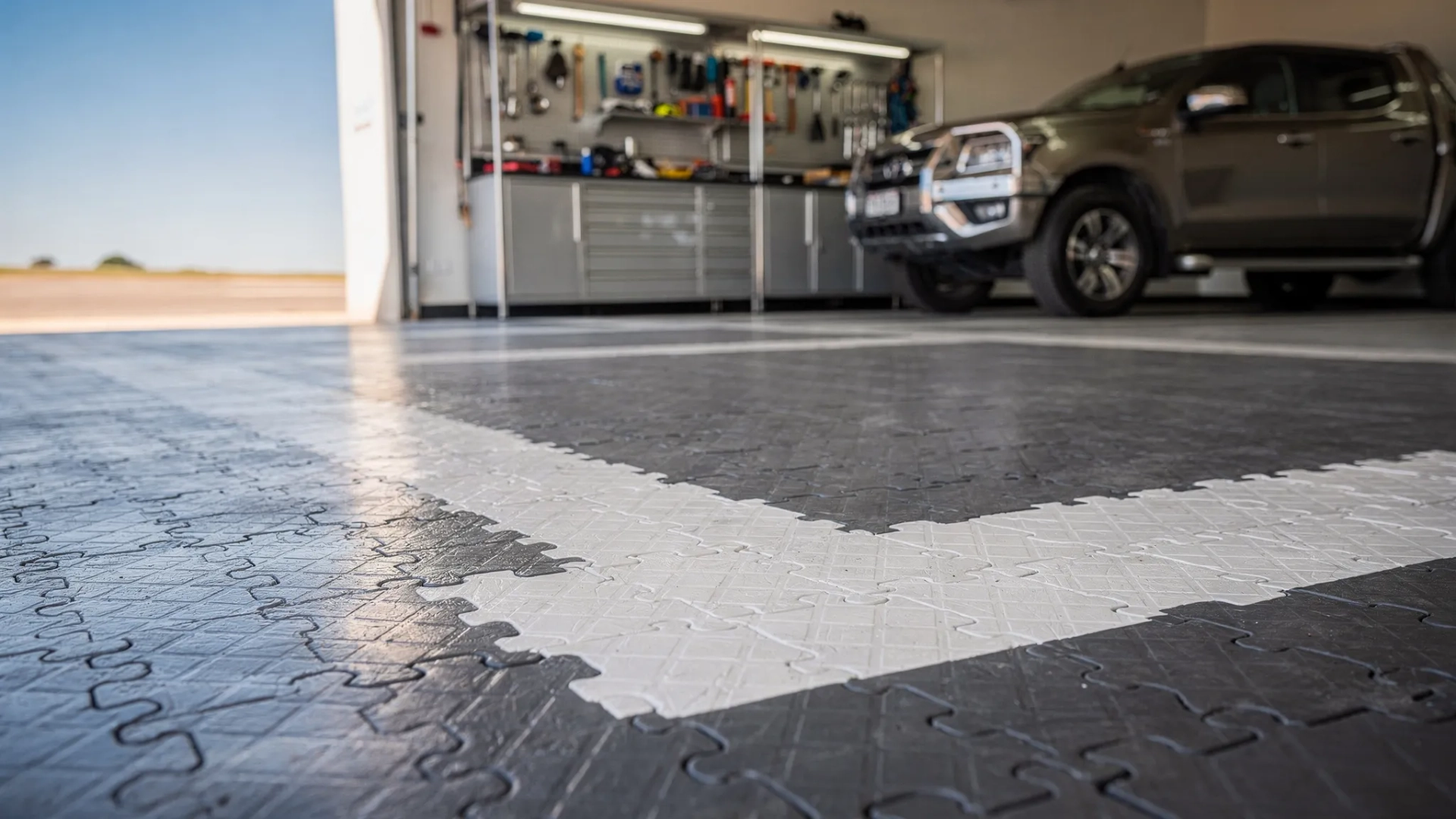
Interlocking tiles have become more visible in South African homes and businesses because modern systems can create a practical floor without the lengthy installation associated with many traditional finishes. The familiar puzzle connection is only part of their appeal. The right tile can protect an existing surface, cope with demanding use and allow selected areas to be repaired without replacing the whole floor.
That does not mean every interlocking tile is suitable for every room. Rubber, recycled PVC and interlocking luxury vinyl products have different strengths, limitations and installation requirements. A successful result depends on matching the material, thickness, surface texture and performance rating to the space, then preparing the floor according to the manufacturer’s instructions.
Quick Answer
Interlocking tiles are worth considering when you need a durable, modular floor that can often be installed with less disruption than a conventional bonded system. They can work well in garages, workshops, gyms, playrooms, shops, offices and selected utility areas. The base must still be sound, clean, dry and suitably level, and the chosen tile must be rated for the traffic, loads, moisture, chemicals, sunlight and temperatures expected in that location.
What Are Interlocking Tiles?
Interlocking tiles are modular floor pieces with edges designed to connect securely. Some have visible puzzle-shaped edges, while others use a more discreet locking profile. Once joined, the tiles form a continuous surface that may remain loose-laid in approved applications or be secured where the product specifications and site conditions require it.
Straightforward installation, simple maintenance and useful durability are three of the main reasons people consider interlocking tiles. However, each advantage must be assessed according to the specific product and intended application. A light domestic foam tile, dense garage tile, rubber fitness tile and commercial interlocking vinyl tile are designed for different environments and should not be treated as interchangeable products.
Why Can Installation Be Faster?
Many interlocking systems reduce wet trades because the connection is built into the tile. An approved loose lay product may not require adhesive across the entire floor, and it may be possible to install it over a suitable existing surface. This can shorten downtime in a garage, shop or office because there may be less demolition, dust and curing time.
Fast installation still begins with careful preparation. The installer needs to check moisture, cracks, contamination, loose finishes, changes in level and the condition of the perimeter. The tiles must normally be conditioned in the space, set out to avoid narrow cuts and fitted with the movement allowance specified by the manufacturer. Doorways, exposed edges and transitions also need the correct trims or ramps.
Installation time therefore depends on the room, the substrate and the system. A clear rectangular room may progress quickly, while a floor with damaged concrete, numerous columns or complicated thresholds will need more preparation. The benefit is lower disruption where conditions are suitable, not a guarantee that every project can be finished in one afternoon.
Where Do Interlocking Tiles Work Best?
Garages and Workshops
Garages and workshops remain among the most popular applications. A correctly rated tile can create a cleaner surface over sound concrete and can help protect the base from routine wear. The textured finish may improve grip, while the modular construction makes it possible to address a localised damaged area.
The product must be selected for the actual use of the room. Check resistance to vehicle loads, turning tyres, oils, fuels, cleaning chemicals and heat from tyres or equipment. A tile suitable for a domestic garage may not be appropriate below a vehicle lift, loaded trolley or industrial machine. Heavy point loads may need load spreading or a different floor system.
Home Gyms and Fitness Areas
Rubber interlocking tiles can provide resilience and a more forgiving surface for exercise. Specialist systems vary considerably. For example, REGUPOL fitness flooring includes products designed for different training and impact demands. This is a useful reminder to choose the floor around the equipment and activities rather than relying on the word rubber alone.
General fitness, free weights, cardio machines and intensive strength training place different demands on a floor. Confirm thickness, impact performance, indentation resistance and acoustic requirements. Very heavy dropped weights may still require dedicated lifting platforms or additional protection, even when rubber tiles are used.
Playrooms and Activity Spaces
Interlocking tiles can make a playroom or activity area easier to organise and maintain. A cushioned surface may feel more comfortable than bare concrete or ceramic tile, and individual sections can sometimes be replaced if they become marked. For spaces used by children, confirm slip performance, cleaning instructions, emissions information and suitability for the age group and activity.
Shops, Offices and Commercial Interiors
Commercial interlocking products can help businesses refurbish with limited interruption. Tarkett’s interlocking commercial tile information shows why classification matters: its published ratings identify the use levels for that particular product. Those ratings should not be transferred to a different tile without supporting technical data.
In an office or retail setting, consider pedestrian traffic, rolling chairs, trolleys, entrances, cleaning frequency and the appearance of the joints. The floor also needs suitable transitions at doors and adjoining finishes. A design that works in a workshop may be visually or acoustically unsuitable in a client-facing space.
Rental Properties and Temporary Uses
A modular loose lay floor can be appealing where the existing surface needs protection or the layout may change. Some systems can be lifted and reused, but this depends on the locking profile, wear and removal method. Tenants should obtain the property owner’s approval and verify that the tile will not trap moisture, mark the existing finish or create unsafe changes in level.
Can Interlocking Tiles Go Over an Existing Floor?
Some interlocking tiles can be installed over concrete, ceramic tile or another firm finish, provided the surface meets the product requirements. The word existing does not mean unsuitable conditions can be hidden. Loose tiles, pronounced grout lines, cracks, high spots, dampness and oily contamination may affect stability, telegraph through the new floor or prevent the joints from closing correctly.
A site assessment should establish whether repairs, cleaning, levelling or moisture management are needed. Expansion and movement joints in the building must be treated as the manufacturer directs. Covering a structural problem does not solve it, and trapping moisture below an impermeable tile can create odours or damage surrounding materials.
Do Interlocking Tiles Need Adhesive?
Many products are designed for loose lay installation, including Carpet & Decor’s current Decor Lock product, which states that adhesive is not required. This is a product-specific feature, not a rule for every interlocking floor. Perimeters, ramps, extreme temperatures, rolling loads or large areas may change the installation method.
Always follow the current technical sheet and warranty conditions. Adding adhesive to a system intended to move as a floating floor can create problems, while omitting adhesive where it is required can allow movement or joint failure. If the room has unusual loads or direct solar heat, obtain written guidance before installation.
What Makes Interlocking Tiles Durable?
Durability comes from the material, density, thickness, wear layer, locking design and suitability for the expected load. A dense tile with a strong joint may cope well with repeated traffic, but a softer tile may compress under narrow furniture feet. A decorative commercial vinyl tile may resist scuffs differently from a recycled PVC garage tile or rubber gym tile.
Ask for technical information rather than relying only on a broad durable description. Useful details include use classification, static and rolling load limits, slip performance, fire classification, chemical resistance, dimensional stability and warranty. For a garage, also ask about hot tyre behaviour. For a sunny room, check temperature and light exposure limits. For a gym, confirm impact and indentation performance.
Are Interlocking Tiles Easy to Clean?
Routine care is usually uncomplicated. Remove grit with a soft broom or suitable vacuum, then clean with a damp mop and a neutral product approved for the tile. Deal with spills promptly and avoid flooding the floor. Water and residue can move through joints on some systems, so interlocking tiles should not automatically be treated as a sealed waterproof surface.
Avoid harsh solvents, abrasive pads and unapproved polishes. Garage and workshop contaminants may require a specific cleaner that is compatible with the tile. Test any product in an inconspicuous area and follow dilution instructions. Entrance mats can reduce tracked grit, although rubber-backed mats should only be used where the flooring manufacturer permits them.
Can One Damaged Tile Be Replaced?
Local replacement is one of the most useful benefits of a modular floor. If a tile becomes permanently stained, cut or worn, it may be possible to release the surrounding joints and fit a matching replacement. The exact process depends on the connection, tile position and installation method.
Keep spare tiles from the original batch because colours and textures can vary between production runs. A replacement tile may also look newer than the surrounding floor until it has been used and cleaned several times. If damage keeps appearing in the same place, investigate the load, substrate or cleaning method instead of repeatedly changing the tile.
Can You Install Interlocking Tiles Yourself?
Some products are suitable for competent home installation, particularly in a small, uncomplicated room. Begin by measuring accurately and allowing for waste. Read the full installation guide, condition the tiles as directed, repair the base and plan the layout from a reliable reference line. Dry laying several rows helps reveal awkward cuts before the floor is locked together.
Join tiles using the method and tools specified for the product. Do not force joints that are misaligned. Cut edges carefully, maintain the required perimeter space and use proper transition pieces where people or wheels cross the edge. Large commercial areas, moisture concerns, heavy machinery and complex doorways are strong reasons to use an experienced installer.
What Should You Compare Before Buying?
Start with the room rather than the colour. Record the substrate, area, door clearances, expected traffic, point loads, rolling loads, spills, sunlight and cleaning routine. Then compare products that are explicitly approved for those conditions. Thickness alone does not prove that one tile will outperform another because construction and density also matter.
Check pack coverage and calculate enough material for cuts and future repairs. Confirm available ramps, corners and transition trims. Ask how the surface behaves when wet, whether it can be used outdoors, and what the warranty excludes. A sample can help you assess colour, texture, joint visibility and how easily marks can be removed.
Carpet & Decor’s Decor Lock interlocking tiles are currently described as recycled PVC tiles for selected heavy traffic environments, including garages, workshops, storage areas and gyms. Review the current product details and obtain advice where loads or conditions fall outside ordinary use.
When Are Interlocking Tiles Not the Right Choice?
Choose another system if the tile is not rated for the environment, if the substrate remains damp or unstable, or if the change in floor height creates unsafe thresholds. Interlocking joints do not turn an indoor tile into an outdoor product, and they do not make every floor resistant to chemicals, direct sun or heavy machinery.
Spaces that require a fully sealed hygienic finish may need welded or resin-based flooring rather than a jointed modular surface. Areas with significant falls to drains also need careful assessment. The best floor is not the one with the easiest marketing promise; it is the one whose tested performance and installation method suit the project.
Why Interlocking Tiles Deserve Consideration
Straightforward installation, simple maintenance and useful durability are persuasive reasons to consider interlocking tiles. Their modular design can reduce disruption, simplify local repairs and provide practical protection in demanding spaces. They may be especially suitable where installing a conventional bonded floor would require unnecessary removal work or extended downtime.
The final decision should be based on a site assessment and the specifications of the selected tile. Compare the substrate, traffic, loads, environmental exposure and finishing requirements before ordering. If you need help matching a product to a garage, gym, workshop, playroom or commercial area, contact Carpet & Decor for advice and a quotation.
Frequently Asked Questions
Can interlocking tiles be installed over an existing floor?
Yes, some interlocking tiles can be installed over a sound existing floor, but the surface must meet the manufacturer’s requirements. It should normally be dry, clean, firm and suitably level. Loose finishes, moisture, contamination, deep grout lines or structural cracks may require correction before installation. A site assessment is the safest way to confirm whether preparation is needed.
Do interlocking tiles always need adhesive?
No. Many interlocking tiles are designed for loose lay installation, and Carpet & Decor’s Decor Lock product currently states that no adhesive is required. Other systems or site conditions may differ. Large areas, ramps, rolling loads, temperature changes and perimeter details can affect the method, so follow the current technical instructions for the exact product.
What should I check before using interlocking tiles in a garage?
Confirm that the tile is approved for vehicle loads, turning tyres, oils, cleaning chemicals and expected temperatures. Check the condition and moisture level of the concrete, as well as doorway clearance and edge ramps. If the garage contains a vehicle lift, heavy cabinet or machinery, obtain written load guidance before selecting the floor.
Can a damaged interlocking tile be replaced on its own?
Often, yes. A modular tile can usually be released and replaced without removing the complete floor, although the method depends on the locking system and the tile’s position. Keep spare tiles from the original batch so the colour and texture match. Repeated damage in one area may indicate an unsuitable load or substrate problem.
Can interlocking tiles be used in direct sunlight or outdoors?
Only when the manufacturer specifically approves the product for that exposure. Direct sunlight and outdoor temperature changes can cause some materials to expand, fade or distort. Check ultraviolet stability, temperature limits, drainage and the required movement space. An indoor tile should not be moved onto a patio simply because its joints lock together securely.