How to Choose Carpet Tile Backing for Comfort, Acoustics and Stability

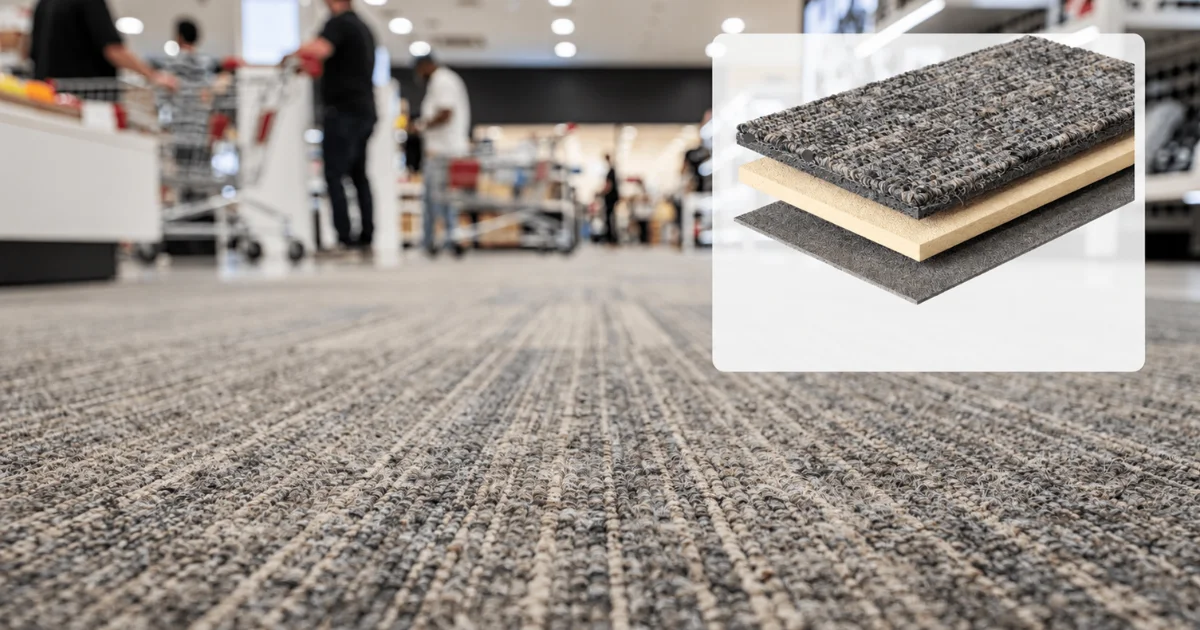
Choosing carpet tile backing is about more than deciding whether a tile feels soft or firm. The backing forms part of the complete flooring system and can influence dimensional stability, underfoot comfort, acoustic performance, installation, moisture management and the way the tile responds to furniture or rolling loads.
The correct choice depends on the exact product and the area where it will be installed. A fitting room, checkout, main aisle and stockroom can place very different demands on a carpet tile. This guide explains how to compare cushion and hard backing without relying on general claims that may not apply to the product you are considering.
Quick Answer
Choose carpet tile backing according to the traffic, rolling loads, standing time, acoustic goal, subfloor, moisture condition and cleaning method in each zone. Cushion backing may add comfort and acoustic support, while many hard backing systems prioritise dimensional stability and seam integrity. Always confirm the performance of the exact carpet tile and installation system.
Why Does Carpet Tile Backing Matter?
A carpet tile combines a visible textile surface with a supporting construction beneath it. The backing helps the module retain its form, lie correctly on the prepared floor and work with the specified fixing system. It can also influence how much impact sound passes through the floor and how firm or cushioned the surface feels.
Backing names can be misleading when they are treated as performance guarantees. Products within the same broad family may use different materials, reinforcement layers, thicknesses and manufacturing methods. Compare the current technical data for the exact product code rather than assuming every cushion or hard backing behaves in the same way.
What Is the Difference Between Cushion and Hard Backing?
Cushion Backing
Cushion-backed carpet tiles include a resilient layer that may soften impact and improve underfoot feel. They are often considered for areas where people stand for extended periods, where a quieter atmosphere is important or where a more forgiving surface supports the design brief.
The acoustic benefit must still be confirmed through product data. Sound absorption within a room and impact sound reduction through a floor are different measurements, so a single acoustic claim may not answer the project question. The result also depends on the complete floor construction, room finishes and installation.
Hard Backing
Hard backing is a broad description for firmer modular backing systems made from materials such as vinyl, polyolefin, polyester or other reinforced compounds. These systems are commonly associated with dimensional stability, defined edges and reliable pattern alignment.
A firm backing may be useful where tiles must resist movement under regular traffic or where wheeled equipment and display changes are part of daily operation. It should not automatically be described as suitable for every trolley, pallet jack or concentrated load. The manufacturer must confirm performance for the expected equipment, load, wheel type and turning pattern.
Can One Project Use More Than One Backing Type?
Yes. A zone-based specification can use different carpet tile constructions where the needs change across a building. A customer consultation area may prioritise comfort and acoustic support, while a circulation route may require firmer dimensional performance. The products must still work together at transitions, finished levels and adjoining surfaces.
Using different backings also affects procurement and future replacement. Record the product, colour, backing, batch and installation location clearly. Retaining suitable spare tiles from the original order can make local repairs more consistent if a module is permanently stained or damaged.
How Should Carpet Tile Backing Be Assessed in Retail and Commercial Zones?
Areas Where People Stand or Pause
Checkouts, service counters, consultation points and fitting areas may benefit from a carpet tile that supports a comfortable underfoot feel. Cushion backing can be considered, but the full workplace design should address standing time, footwear, task rotation and any separate ergonomic measures. Flooring alone should not be presented as a guaranteed solution to fatigue.
Main Aisles and Rolling Routes
Trolleys, stock cages, castor chairs and movable displays create concentrated pressure and repeated turning forces. Give the flooring supplier accurate information about the intended equipment and loads. Ask for relevant test results or written confirmation that the complete carpet tile and installation system suits those conditions.
Quiet Customer and Work Areas
Carpet can reduce reflected sound and soften the noise created by footsteps or moving furniture. A cushion-backed tile may offer additional acoustic performance, depending on its construction. Define whether the goal is to reduce sound within the room or limit impact transmission to an adjoining space, then compare the correct tested value.
The Carpet and Rug Institute explains that commercial carpet selection should consider the backing, traffic requirements and the acoustic values of the complete construction. Its guidance on finding the right commercial carpet provides a useful overview for specifiers and building owners.
Entrances and Moisture Exposed Areas
Carpet tile backing does not correct water entry, a damp slab or an unsuitable entrance design. Moisture conditions should be tested using the method required by the product and adhesive manufacturer. Any leak, rising damp or recurring water problem must be investigated before the floor is covered.
Entrance matting, safe transitions and an appropriate cleaning plan help control soil and moisture. Where the area experiences frequent wet contamination, confirm whether carpet tile is the right finish for that zone or whether another commercial flooring system would be more practical.
What Should You Check on a Carpet Tile Specification?
A technical data sheet should be read as a complete document. One strong value does not prove that the tile suits every requirement. Confirm which product, colour, size, backing and installation method the test results cover, and check that the data is current.
- Intended commercial use classification and traffic suitability
- Dimensional stability and edge performance
- Relevant rolling load or castor chair information
- Impact sound reduction and sound absorption values where required
- Fire performance required for the building and area
- Emissions information requested by the project team
- Total thickness and finished level at adjoining surfaces
- Moisture limits, adhesive compatibility and subfloor preparation
- Cleaning methods, drying requirements and warranty conditions
Manufacturer backing guides can help explain the available constructions, but their values apply only to the stated products and test conditions. The Interface backing overview is one example of how acoustic and comfort claims are tied to named backing systems rather than to every carpet tile.
How Do South African Conditions Affect the Choice?
South African buildings face varied conditions, including coastal humidity, dry inland winters, seasonal storms, dust, sand and strong sunlight through large glazed entrances. The project should respond to measured site conditions rather than applying one regional rule to every building.
Subfloor and Moisture
The substrate must be sound, clean, dry and within the tolerances required by the selected system. Existing finishes, cracks, contamination, unevenness and moisture can affect the adhesive and finished appearance. A backing may help manage some types of surface exposure, but it is not a substitute for correcting the underlying cause of moisture.
Sunlight and Temperature
Large shopfronts can create local heating and strong light exposure. Ask the manufacturer about dimensional stability, colourfastness, adhesive selection and any limits related to direct sunlight. Reinforcement can contribute to stability, but no general material description should replace written guidance for the exact product.
Cleaning and Drying
Cleaning must suit the face fibre, backing, adhesive and operating conditions. Confirm approved detergents, equipment, extraction methods and drying times. Cushion backing should not automatically be described as more absorbent because constructions differ. The relevant question is how the complete specified product behaves during the approved cleaning process.
A Practical Carpet Tile Backing Selection Process
A reliable carpet tile backing decision begins with the conditions, traffic, acoustic requirements and installation needs of each area.
- Map each area according to foot traffic, rolling loads, standing time, moisture risk and acoustic needs.
- Inspect the substrate and confirm testing, preparation and finished levels.
- Shortlist exact carpet tile products rather than choosing only a backing family.
- Compare current technical data and request clarification for any missing project requirement.
- Test samples under the actual lighting and against the planned furniture and adjoining finishes.
- Confirm adhesive, installation pattern, transitions, cleaning and drying requirements.
- Record the final specification and retain labelled spare tiles where appropriate.
Buyer Tip
Ask the supplier to confirm the complete system in writing. The face fibre, tile construction, backing, adhesive, substrate preparation, installation method and cleaning plan must work together. A backing label on its own is not a complete specification.
When Should You Choose Carpet Tiles?
Carpet tiles can suit offices, retail stores, hospitality areas, learning spaces and other commercial interiors where modular replacement, design flexibility and acoustic comfort are useful. They are available in different fibres, constructions, formats and backing systems, so the product should be chosen for the actual zone rather than from appearance alone.
Browse Carpet & Decor’s carpet tile range to compare colours, formats and commercial options. Product availability and backing specifications vary, so request the current data for any tile being considered for a project.
Choose the Complete Carpet Tile System
The best carpet tile backing for comfort, acoustics and stability is the one that supports the exact performance brief. Cushion and hard backing systems each have useful characteristics, but neither category is automatically right for every room, load or subfloor.
Carpet & Decor can help assess the zones, compare samples and review the available product information before installation. Contact Carpet & Decor to discuss carpet tile options for your retail, office or commercial interior.
Frequently Asked Questions
Can one building use different carpet tile backings in different zones?
Yes. Different zones can use different carpet tile constructions when their traffic, rolling loads, comfort and acoustic needs vary. The selected products must meet correctly at transitions and finished levels. Record each product and installation area clearly, and confirm that the proposed backings, adhesives and maintenance methods suit their specific locations.
Does cushion-backed carpet tile always provide better acoustics?
Not automatically. Cushion backing may improve acoustic performance, but the result depends on the exact tile, backing construction, installation and room. Check whether the project needs sound absorption within the space or impact sound reduction through the floor. Compare the relevant tested values for the complete product rather than relying only on the word cushion.
What backing information should be checked for trolley routes?
Provide the supplier with the expected trolley or stock cage load, wheel type, frequency and turning pattern. Ask for relevant rolling load, castor or dimensional stability information for the exact carpet tile. The backing, adhesive and prepared substrate must work as one system, so a general hard backing description is not enough.
Can carpet tile backing fix an uneven or damp subfloor?
No. Backing cannot correct a weak, contaminated, uneven or persistently damp substrate. The floor should be inspected and tested according to the carpet tile and adhesive requirements. Necessary moisture treatment, repairs or levelling must be completed before installation. Covering the problem may lead to movement, adhesive failure, visible joints or other damage.
Should the carpet tile be tested with the planned adhesive?
The carpet tile, backing, adhesive and substrate preparation should be treated as one installation system. Confirm compatibility in the manufacturer’s current instructions and consider a project trial where conditions are unusual or performance is critical. The trial should use the intended substrate preparation, adhesive application and curing conditions rather than testing the tile in isolation.