Best Commercial Flooring for Retail Stores With Heavy Foot Traffic in South Africa

A practical guide to choosing flooring by retail zone, risk and daily operation
Busy retail floors need to support customer movement, staff safety, cleaning, stock handling and the visual identity of the store. The best commercial flooring for retail stores with heavy foot traffic is therefore not one universal product. It is a fit-for-purpose specification that matches each area to its actual use.
A supermarket entrance, fashion sales floor, pharmacy dispensary and stockroom do not face the same combination of moisture, wheeled traffic, noise and cleaning. Retailers can achieve better long term value by mapping these zones first, then comparing products using verified technical information, realistic maintenance requirements and a professional site assessment.
Quick Answer
The best commercial flooring for heavy foot traffic retail stores may include commercial LVT, homogeneous or safety vinyl, carpet tiles, porcelain tile, resin systems and suitable rubber flooring. Confirm slip performance, rolling load resistance, cleaning compatibility, subfloor preparation, installation method and warranty terms before making the final choice.
Why Retail Flooring Must Be Chosen by Zone
Foot traffic is only one part of the demand placed on a retail floor. Entrances receive water and grit. Main aisles carry customers, trolleys and stock cages. Point of sale areas experience concentrated standing and turning. Fitting rooms may prioritise comfort and acoustics, while storerooms need practical resistance to rolling loads and impact.
Using one material everywhere may simplify ordering, but it can also force a compromise. A zoned approach allows the retailer to use a resilient, cleanable surface in spill-prone areas and a quieter finish where customer comfort and sound control matter more. Transitions must still be planned carefully so the route remains level, visible and easy to maintain.
How Do You Choose the Best Commercial Flooring for Busy Retail Stores?
Commercial LVT
Commercial LVT can be among the best commercial flooring options for fashion, electronics, furniture, beauty and general retail stores. It is often considered for fashion, electronics, furniture, beauty and general retail because it supports detailed brand design and can be replaced locally in some installations.
The label commercial is not enough on its own. Compare the manufacturer’s use classification, wear layer, residual indentation, castor or rolling load data, slip test results, installation system and warranty. Glued and rigid click products respond differently to subfloor conditions, movement, sunlight and repair, so the specification should follow the site rather than a general rule.
Homogeneous, Heterogeneous and Safety Vinyl
Sheet and tile vinyl can suit areas that require frequent cleaning, visual continuity or specialist safety performance. Homogeneous vinyl is often used where a durable, consistent construction is important. Heterogeneous products offer layered designs, while safety vinyl is developed for areas where sustained slip resistance is required under stated conditions.
Heat welded seams may support a more continuous surface when the product and installation system require them, but the floor is only one part of the result. Coving, junctions, penetrations, moisture control and cleaning procedures must all be specified correctly.
Commercial Carpet Tiles
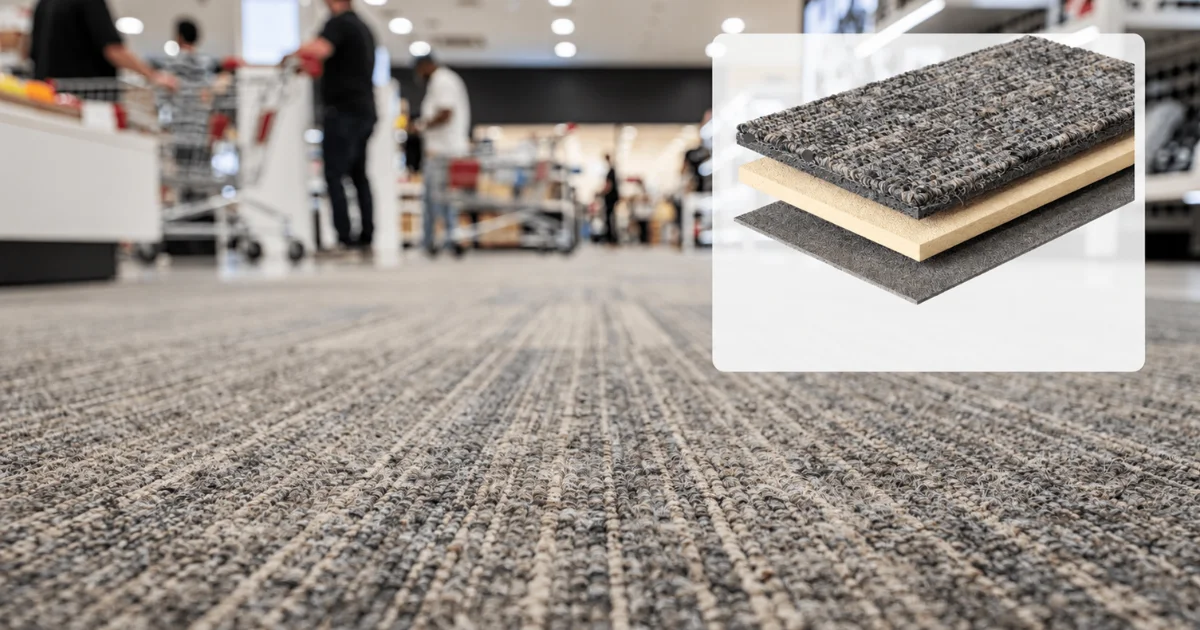
Commercial carpet tiles can be among the best commercial flooring choices for boutiques, fitting areas, consultation spaces and selected service environments. Modular tiles can simplify local replacement if spare stock is retained from the original batch.
Carpet & Decor supplies a range of commercial carpets and modular options for business environments. Explore the commercial carpet range when comparing acoustic and resilient finishes for different retail zones.
Carpet is not the automatic choice for wet entrances, food preparation areas or locations that require frequent wet cleaning. The fibre, construction, backing, installation method, soil hiding design and cleaning plan must suit the expected traffic and contamination.
Porcelain Tile
Porcelain tile can be one of the best commercial flooring options for entrances, supermarkets, food retail and busy circulation routes. Product selection should be based on documented performance for the intended commercial use, not simply the word porcelain or a single rating copied from another market.
Tile joints, grout, movement joints, substrate preparation and replacement access affect long-term performance. A highly textured surface may offer more grip in certain conditions but can require a more demanding cleaning method, so slip performance and cleanability should be assessed together.
Resin and Polished Concrete Systems
Resin systems and treated concrete can support an industrial or minimalist retail concept. They may suit large open spaces, lifestyle stores and warehouse-style formats when the substrate, moisture condition, movement joints, coating build and curing programme are professionally designed.
These finishes are not maintenance-free. Coatings can scratch, wear or require renewal, and the final appearance depends heavily on the underlying slab. Retailers should confirm downtime, odour, ventilation, curing and future recoating requirements before work begins.
Rubber Flooring
Suitable commercial rubber flooring may be considered for entrances, service counters, staff areas, gyms within retail centres and locations where comfort or sound reduction matters. Performance varies across products, so confirm resistance to rolling loads, staining, cleaning chemicals and the expected footwear or equipment.
What Should Retailers Check When Choosing the Best Commercial Flooring?
Slip Risk and Cleaning Conditions
A slip classification should never be chosen from a generic chart alone. The relevant test method, contamination, slope, footwear, cleaning regime and operating conditions all affect risk. Ask for current technical data and professional advice for entrances, chilled areas, food zones and other places where water or grease may reach the floor.
South Africa’s current General Safety Regulations require workplace floors and walkways to be kept in good repair, free of obstruction and skid-free. Review the official General Safety Regulations and obtain project-specific compliance advice where necessary.
The floor must also remain safe during cleaning. Barriers, timing, equipment, chemical choice and drying procedures are operational decisions, not afterthoughts.
Rolling Loads and Concentrated Pressure
Trolley wheels, pallet jacks, stock cages, display units and narrow furniture feet can create demands that ordinary pedestrian traffic does not. Provide the supplier with the expected equipment, wheel material, load and turning pattern. Confirm that the flooring, adhesive and prepared substrate can support those conditions without indentation, joint failure or local damage.
Moisture and Subfloor Condition
A visually attractive floor can fail early when installed over a damp, weak or uneven substrate. The site assessment should identify the substrate type, level tolerances, moisture condition, cracks, contamination, existing finishes and required smoothing or repair. Product and adhesive requirements should determine the testing and preparation plan.
Shopfront Sunlight and Temperature
Large glazed shopfronts can expose the floor to strong sunlight and local temperature changes. Ask the manufacturer for guidance on direct sun, dimensional stability, colour change, adhesive selection and movement. Window coverings, display layouts and environmental control may form part of the solution, but they do not replace a suitable product specification.
Acoustics and Customer Comfort
Hard surfaces can increase the sound of footsteps, trolleys and activity in a busy store. Carpet tiles, selected resilient floors and acoustic backing systems may help, but performance should be confirmed through product data and considered alongside ceiling, wall and layout choices.
Maintenance and Business Continuity
Before selecting the floor, confirm how it will be cleaned during normal trading, how quickly spills can be isolated, which chemicals are approved and whether local repairs are possible. A finish that needs specialist equipment may still be suitable if the retailer can support that maintenance plan.
The United Kingdom Health and Safety Executive’s retail guidance explains that wet floors, spills and contamination are common contributors to slips, and that effective cleaning requires suitable products, equipment, timing and supervision. Read its retail slips and trips guidance for a useful operational perspective.
A Practical Retail Flooring Selection Process
Choosing the best commercial flooring requires retailers to assess each store zone, its risks and the daily operational demands placed on the surface.
- Map the store into entrance, sales, queue, fitting, food, chilled, stock and staff zones.
- Record the main risks in each zone, including water, grit, food, trolleys, sunlight, noise and concentrated loads.
- Confirm the substrate, moisture condition and preparation requirements before pricing the finish.
- Request technical data for commercial use, slip performance, rolling loads, cleaning and installation.
- Compare samples under the store lighting and against real dirt, branding and display colours.
- Plan transitions, trims, movement joints, spare material and access for future repairs.
- Match the installation sequence to trading hours, curing requirements and safe public access.
- Train the cleaning team and keep the approved care guide with the handover documents.
Buyer Tip
Compare the complete installed and maintained system, not only the price per square metre. Preparation, trims, adhesives, phased work, cleaning equipment, downtime, repairs and replacement stock can materially affect long term value.
Why Fixed Prices and Lifespans Can Mislead
The best commercial flooring decision should be based on the complete installed and maintained system rather than a fixed product price. Commercial flooring costs change with product range, area, location, substrate condition, access, installation method, programme and exchange rates. Lifespan also depends on traffic, contamination, maintenance and whether the original specification suits the site. A fixed national price or guaranteed number of years can therefore create false confidence.
Ask for an itemised quote and compare like with like. The proposal should identify preparation, product, adhesive, trims, installation, phasing, warranty, care requirements and exclusions. Lifecycle value is stronger when the retailer can maintain the floor correctly and repair local damage without unnecessary disruption.
Choose a Floor That Supports the Whole Store
The best commercial flooring for a retail store with heavy foot traffic is the one that supports the store’s customers, staff, products, cleaning routines and brand experience. Commercial LVT, sheet vinyl, carpet tiles, porcelain tile, resin systems and rubber can all be appropriate when used in the right zones and supported by accurate technical information.
For help comparing samples, assessing the site and planning a practical installation sequence, contact Carpet & Decor. The team can help match commercial flooring options to the traffic, subfloor, maintenance needs and visual direction of your retail space.
Frequently Asked Questions
Should a retail store use different flooring in different zones?
Yes. A zoned specification can match each area to its main demands. An entrance may need stronger moisture and grit management, while a boutique sales area may prioritise acoustics and design. Transitions must remain level, visible and maintainable, and every selected product should be approved for its intended commercial use.
How do trolley wheels and rolling loads affect retail flooring choice?
Trolleys, stock cages and pallet equipment create concentrated pressure and repeated turning forces that differ from ordinary foot traffic. Provide the flooring supplier with expected load and wheel information. Confirm the floor covering, adhesive and prepared substrate can resist indentation, joint movement or local damage under the actual operating conditions.
What should retailers check when flooring sits behind a sunny shopfront?
Ask for product guidance on direct sunlight, heat, dimensional stability and colour change. Strong glazing exposure can affect products and adhesives differently. Consider window coverings and display positions, but do not rely on them alone. The chosen flooring system should be approved for the site conditions and installed according to manufacturer requirements.
How should the cleaning method influence commercial flooring selection?
Select a floor that can be cleaned using the equipment, chemicals, staffing and available time at the store. Confirm how spills are isolated and how quickly the surface dries. A textured or specialist surface may require a specific process, so cleanability and slip performance should be considered together before purchase.
Why test flooring samples under actual retail conditions?
A sample viewed in a showroom may look different under shop lighting, beside branded displays or after contact with local dust and grit. Testing helps the project team assess colour, texture, soil hiding and cleaning response. It does not replace technical data, but it supports a more informed final design decision.