Types of Laminate Flooring: Find the Perfect Match for Your Home and Lifestyle

A practical guide for choosing laminate flooring in South Africa
Choosing between the different types of laminate flooring is easier when you begin with the room, your daily routine and the conditions the floor must handle. Colour and grain matter, but the correct laminate also needs a suitable use classification, moisture performance, surface finish, plank format and installation system.
A quiet bedroom, busy passage, family kitchen and home office do not place the same demands on a floor. South African homes can also experience strong sunlight, seasonal temperature changes, coastal humidity and occasional plumbing problems. The best choice is therefore the laminate product whose documented performance suits the actual space, not simply the thickest board or the most attractive sample.
Quick Answer
The right types of laminate flooring are selected by matching the use classification, moisture rating, surface finish, plank size, edge detail and locking system to the room. Check the complete manufacturer specification and warranty, then assess the subfloor, underlay, sunlight, traffic and cleaning routine before deciding on a colour or style.
What Do the Different Types of Laminate Flooring Actually Mean?
Laminate flooring is often grouped by colour or wood appearance, but the meaningful differences go beyond décor. Two oak-look planks can perform very differently if they have different use classifications, joint systems, moisture protection or warranty conditions.When comparing products, think about five connected areas: where the floor may be used, how much wear it is designed to handle, how it responds to moisture, how it looks and feels, and what the complete installation requires. Treating these factors as one system helps you avoid choosing a beautiful floor that is unsuitable for the room.
How Do Use Classes Compare Across Types of Laminate Flooring?
What does a laminate use class tell you?
A use class indicates the type and intensity of use for which a laminate product has been classified. Domestic classes generally cover light to intensive household use, while commercial classes cover progressively more demanding public or business environments. The class printed on the product documentation should be considered together with the manufacturer’s room suitability and warranty.
The European Producers of Laminate Flooring overview distinguishes domestic use classes 21 to 23 from commercial classes 31 to 34. A higher number is not automatically necessary for every home. The aim is to choose a product properly classified for the actual traffic and use.
Is the AC rating the same as the use class?
No. An AC rating relates specifically to abrasion resistance, while a use class represents broader suitability for a level of domestic or commercial use. Both may appear in product information, but neither should be interpreted in isolation. Ask for the full technical data rather than relying on one prominent number on a display label.
For a busy household, passage, entrance or home office with a wheeled chair, look for a laminate whose complete classification and warranty cover that use. A lightly used guest bedroom may not need the same performance level as the main living area.
Compare Moisture Resistant Laminate Carefully
Moisture performance can vary considerably between different types of laminate flooring.
What is the difference between water resistance and waterproof claims?
Water resistance is product specific. Some laminate ranges are designed to resist surface spills for a stated period when installed and maintained according to their instructions. That does not mean every laminate can tolerate standing water, a leaking appliance, water entering beneath the floor or an unresolved damp subfloor.
Check the exact wording of the warranty, the rooms covered and any required edge treatment or installation accessories. Clean spills promptly even when the product offers improved moisture resistance. For bathrooms, laundries or other areas with frequent standing water, confirm in writing that the chosen product is approved or consider a flooring type designed for wetter conditions.
If the floor will continue into a kitchen, use Carpet & Decor’s laminate flooring for kitchens guide to assess product approval, spill management, subfloor preparation, expansion space and cleaning requirements in more detail.
Do Not Judge Laminate Flooring by Thickness Alone
Does a thicker board always last longer?
No. Thickness can influence the feel of the floor and the way it works with door clearances, transitions and underlay, but it does not by itself determine durability. Wear performance, core quality, joint strength, product classification, subfloor condition and correct installation all matter.
A thicker laminate on an uneven or damp substrate can still fail. A correctly specified board on a dry, level and stable subfloor may perform better than a thicker product chosen without checking the rest of the system. Compare like with like and ask what the additional thickness changes in practical terms.
Compare Surface Styles Across Types of Laminate Flooring
Light wood look laminate
Pale oak, ash and washed timber looks can make an interior feel lighter and more relaxed. They often work well in compact rooms, contemporary homes and spaces with limited natural light. Very pale floors may show dark grit or marks, so view a full plank and consider the household’s cleaning routine.
Mid tone wood look laminate
Natural oak and medium brown finishes are versatile because they balance warmth with practical everyday appearance. They can coordinate with a wide range of furniture and may disguise dust, paw marks and small surface marks more effectively than very light or very dark colours.
Dark wood look laminate
Deep brown, charcoal and smoked timber looks can create contrast and a more dramatic atmosphere. They may suit larger rooms or interiors with strong natural light, but dark surfaces can make dust and fine scratches more noticeable. Test the sample beside the room’s wall colour, furniture and lighting before deciding.
Stone and tile look laminate
Some laminate ranges recreate stone, concrete or tile effects while retaining a floating plank or panel construction. This can support a modern design direction, but the surface appearance does not change the room suitability. Moisture performance, slip characteristics, joint design and installation requirements still need to be checked.
How Do Plank Width, Edges and Texture Change the Result?
Wide and narrow plank formats
Wider planks can create a calmer visual rhythm with fewer joins, while narrower planks may introduce more detail and suit traditional interiors. Room dimensions, plank direction and the amount of natural light all affect the result. A wide plank is not automatically better for a small room, but it can work well when the proportion and layout are planned carefully.
Square edges and bevelled edges
Square-edged boards can create a smoother, more continuous appearance. Bevelled edges define each plank and can strengthen the impression of individual timber boards. The depth and colour of the bevel influence how visible the joins appear and how easily dust may collect along them.
Matte, embossed and gloss finishes
Matte and textured surfaces often conceal fingerprints, dust and small marks more effectively than a highly reflective finish. Embossed textures can make the surface feel closer to the grain shown in the décor. Gloss finishes reflect more light but may require more frequent cleaning to maintain an even appearance.
Buyer Tip
Borrow or view the largest available sample in the actual room. Check it in morning light, afternoon light and artificial light, then place it beside the skirting, cabinetry and furniture. A small showroom sample can look noticeably different across a complete floor.
Match Different Types of Laminate Flooring to Each Room
Living rooms and passages
Prioritise a use classification suited to regular household traffic, a surface that manages everyday marks and a colour that connects the main rooms. Passages often receive concentrated wear, so the product should cover that intensity of use rather than being selected only for the lounge.
Kitchens and entrances
Choose a laminate explicitly approved for the room and expected spill exposure. Consider tight joints, suitable moisture protection, practical mats and prompt cleaning. Entrances also bring grit and moisture onto the floor, so a durable finish and compatible entrance mat are important.
Bedrooms
Bedrooms generally experience lighter traffic, allowing comfort, colour and texture to carry more weight in the decision. A compatible underlay can contribute to walking comfort and sound control. The chosen system must still suit the subfloor and any underfloor heating.
Home offices
A home office may experience repeated movement from a wheeled chair and concentrated furniture loads. Check that the product and underlay are suitable for those conditions. Use a floor protector or castors approved for the laminate rather than assuming every chair mat is compatible.
Homes with children and pets
Look for a use classification suited to active household traffic, a forgiving matte or textured finish and clear care guidance. Moisture resistance may be useful around water bowls or entrances, but spills should still be cleaned quickly. Keep furniture pads and entrance mats clean so trapped grit does not scratch the surface.
Rental properties
A versatile mid-tone décor and a product classified for the expected traffic can simplify future styling and maintenance. Check whether individual boards can be sourced later and keep a small quantity from the same production range when practical. The total installed system matters more than selecting the lowest carton price.
Plan Open Plan Areas and Strong Sunlight
When comparing types of laminate flooring for open plan areas, choose a product suited to the most demanding included room. Using one laminate throughout connected living areas can create visual continuity, but the chosen product must suit the most demanding included room. A kitchen connected to a lounge, for example, introduces moisture and cleaning considerations that would not apply to a lounge alone.
Large glazed areas can expose sections of the floor to strong sunlight and temperature changes. View samples in the room, confirm the manufacturer’s lightfastness information and plan the required movement gaps. Blinds or curtains can help manage direct exposure, while rotating rugs may reduce sharply defined colour differences over time.
Check the Subfloor, Underlay and Locking System
Why does the subfloor affect which laminate you choose?
All types of laminate flooring need a sufficiently dry, clean, level and stable base within the selected product’s tolerances. Underlay is not intended to correct major dips, loose tiles or damaged screed. Moisture conditions should be assessed appropriately, especially over concrete, after a leak or where an earlier floor has failed.
How should underlay be selected?
Underlay must work with the laminate, subfloor, expected loads, acoustic requirements and any underfloor heating. A thicker or softer underlay is not automatically better. Too much movement can place stress on the click joints, so use an attached pad or separate underlay only as permitted by the flooring manufacturer.
The EPLF guidance on choosing laminate underlay explains that the floor and underlay must function as a complete system. Local consumer guidance from SAWLFA also emphasises moisture, levelness, acclimatisation and expansion planning.
What should you know about the locking system?
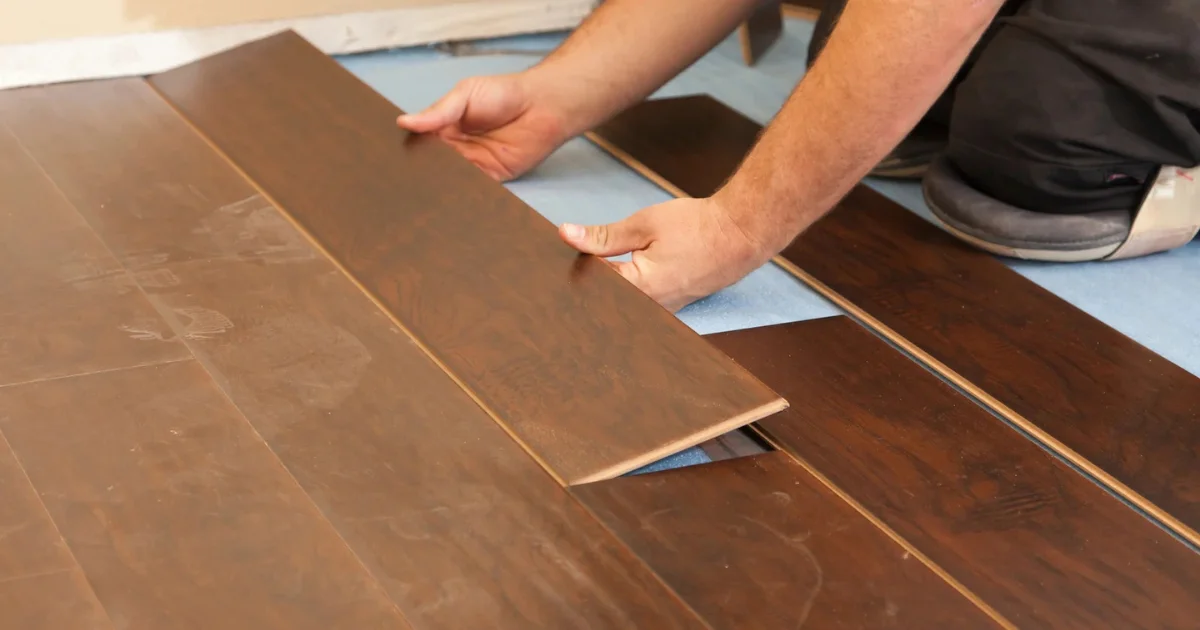
A well-designed locking system supports accurate assembly and stable joints, but it still depends on good preparation and correct technique. Do not force boards together, damage the edges or pin a floating floor beneath fixed cabinetry. Plan the first and final rows, doorways and transitions before installation begins.
For a fuller preparation checklist, read Top Mistakes to Avoid When Installing Laminate Flooring. It covers uneven substrates, acclimatisation, expansion space, underlay, fixed fittings and other issues that can affect an otherwise suitable laminate choice.
Compare the Complete Installed Cost
Different types of laminate flooring should be compared according to the complete installed cost, not only the board price. Laminate flooring prices should be compared as a complete installed outcome. The board price is only one part of the project. Include subfloor preparation, moisture control, underlay, trims, skirting or scotia, delivery, fitting, door adjustments, removal of the old floor and an appropriate cutting allowance.
The correct profiles and perimeter details should be selected with the floor. Carpet & Decor’s guide to essential flooring accessories explains how underlay, skirting, transition profiles and stair nosings complete the installation.
A cheaper plank can become the more expensive option if the quotation excludes necessary preparation or accessories. Ask for an itemised proposal and compare warranty coverage, product suitability and installation requirements as well as the initial price.
Choose with Future Care and Replacement in Mind
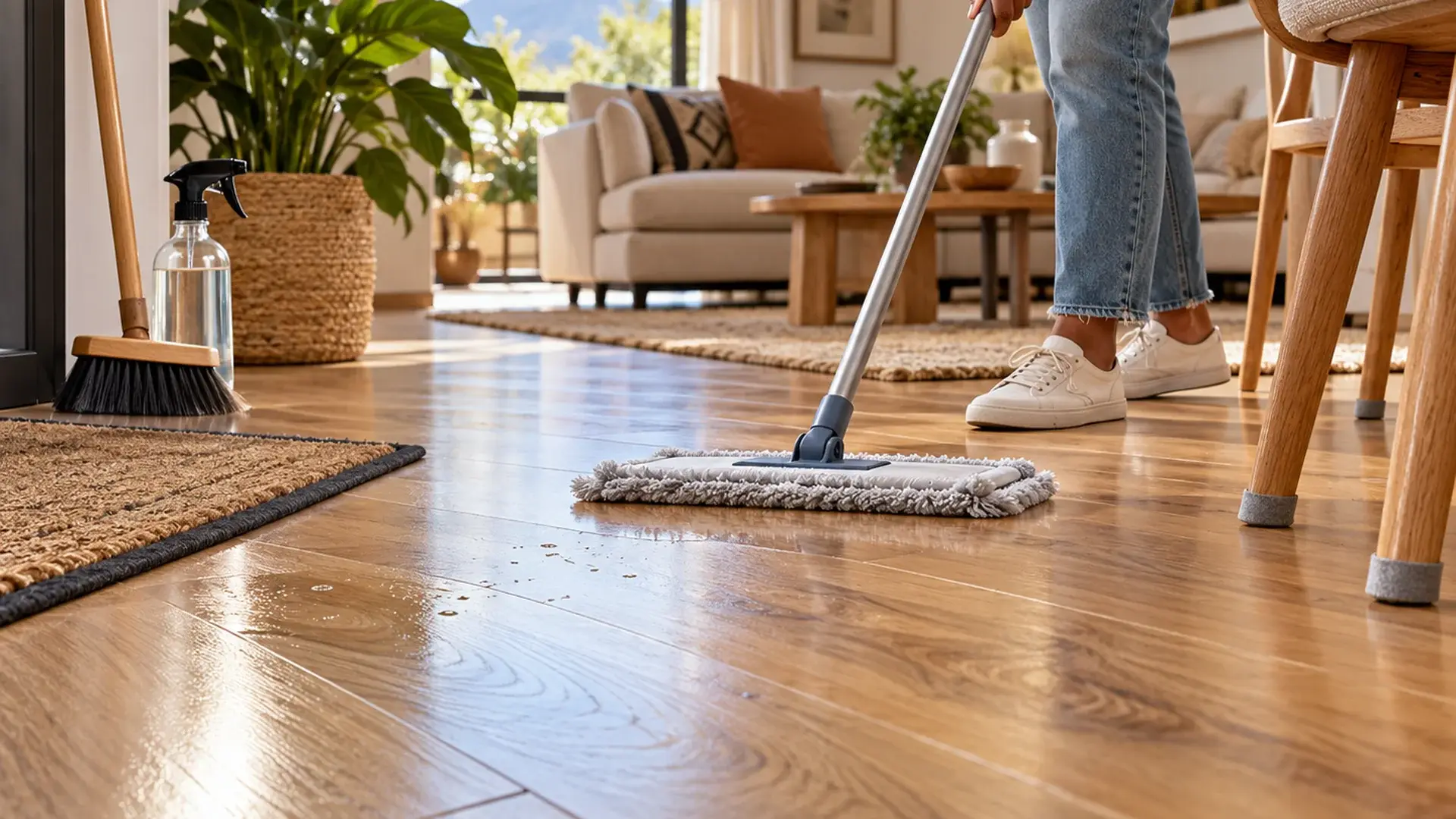
Care and replacement requirements may differ between types of laminate flooring, products and installation systems. The right laminate should fit the household’s realistic cleaning routine. Sweep or vacuum with a hard floor setting, use a lightly damp microfibre mop, clean spills promptly and avoid excess water. Follow the manufacturer’s care instructions and confirm whether steam cleaning is permitted before using any steam appliance.
Keep spare boards where possible, especially when the décor may later be discontinued. Isolated surface damage does not always mean that the entire floor must be replaced, but swollen boards, unstable areas, failed joints or recurring moisture need proper assessment.
If you are replacing an existing floor, the guide to when and why laminate flooring should be replaced explains how to distinguish repairable marks from moisture damage, movement and broader system failure.
Final Answer: Which Type of Laminate Flooring Should You Choose?
When comparing types of laminate flooring, choose the product that matches the room before choosing the décor. Confirm the use classification, abrasion information, moisture approval, thickness, joint design, surface finish and warranty. Then check that the subfloor, underlay, transitions and installation method support that product.
Once the practical requirements are clear, compare colours, plank widths and textures in the actual light of your home. Browse Carpet & Decor’s laminate flooring options or contact the team for help matching a product to your rooms, lifestyle and budget.
Frequently Asked Questions
Does thicker laminate always mean it is more durable?
No. Thickness can influence feel, sound and the overall floor build-up, but durability also depends on the wear performance, use classification, core, locking system, subfloor and installation quality. Compare the full product specification and warranty instead of assuming that the thickest board is automatically the strongest option.
How does laminate plank width affect the look of a room?
Wide planks create fewer visual joins and can give a room a calmer, more open appearance. Narrower planks introduce more pattern and may suit traditional interiors. The best proportion depends on room dimensions, plank direction, furniture and light. View several full planks in the space before making the final choice.
Should laminate samples be viewed in different lighting?
Yes. Natural and artificial light can change how warm, pale, grey or textured a laminate appears. View the sample during the morning and afternoon and under the room’s evening lighting. Place it beside walls, cabinetry, skirting and furniture so you can judge the complete colour relationship rather than the plank alone.
Can the same laminate flooring be used throughout an open plan home?
Yes, if the selected laminate is approved for every included area and can accommodate the planned room dimensions and transitions. A kitchen connected to a lounge introduces moisture and cleaning demands that may not apply elsewhere. Confirm expansion requirements, fixed fittings, sunlight exposure and product warranty before creating one continuous floor.
What should I compare when two laminate floors have the same AC rating?
Compare the use classification, moisture approval, core and joint construction, thickness, surface texture, plank size, edge detail, warranty and compatible underlay. The same abrasion rating does not mean two products will perform identically in every room. Choose according to the complete specification and the conditions of the intended space.